
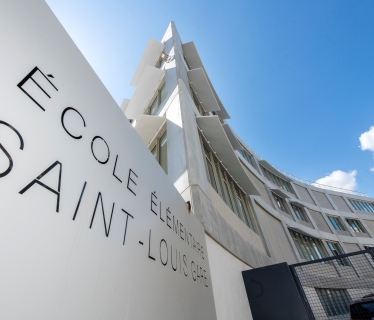

Mohamed B, Works Group Manager, looks back at the key aspects of this project, during which the CARI Mèd agency and its twenty partners met the inherent technical and logistical challenges.
What were the specifics of this project, and what measures did you take to keep the work going in this unusual context?
The entire project took place on an occupied site. The children have always attended the school, which meant that special measures had to be taken to ensure their continuity and safety.
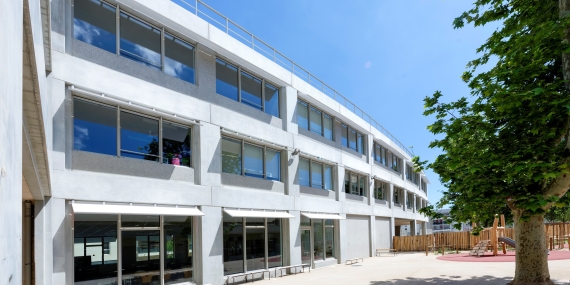
We therefore rebuilt all the classrooms on temporary premises, as well as the refectory, dormitories, playrooms and even a planted area for the playground. The aim was to minimize the inconvenience caused by the construction site. What's more, all the premises have had their insulation reinforced, ensuring optimum thermal comfort in all seasons.
What were the motivations behind assembling the team of local professionals dedicated to implementing this project?
As the work was taking place in Marseille, it was important to choose local partners to stimulate the regional economy and because the thermal dimension was central. For example, the thermal design office, which was particularly well-versed in the specifics of our climate, was based in Aix-en-Provence. We also surrounded ourselves with an architect, an acoustician and a whole technical team capable of offering the city of Marseille a turnkey project. CARI Méd carried out all the structural work, and we collaborated with some twenty subcontracting partners for the electrical and plumbing work, and so on.
The project is also emblematic of FAYAT Bâtiment's determination to play an active part in promoting the Olympic spirit. Can you explain CARI Méd's approach?
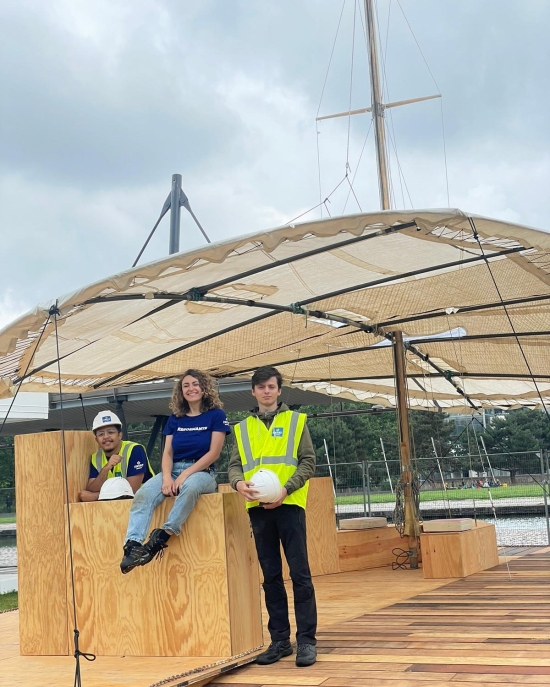
As part of the 2024 edition of the annual Archi Folies event, organized by the French Ministry of Culture, each national school of architecture in France designed and built a temporary pavilion to house a sports federation. Naturally, ENSA Marseille was chosen to design and build the pavilion for the French Sailing Federation. In this context, CARI Méd donated recycled materials to the school, including plywood and bastaings, which were incorporated into the pavilion's construction. Faithful to its commitments, including eco-responsibility, the FAYAT Bâtiment Division gladly supported this initiative, encouraging future building professionals to give priority to reuse and recycling in their practice.
What benefits does the Municipality of Marseille expect from the renovation and extension of the Saint-Louis School Group?
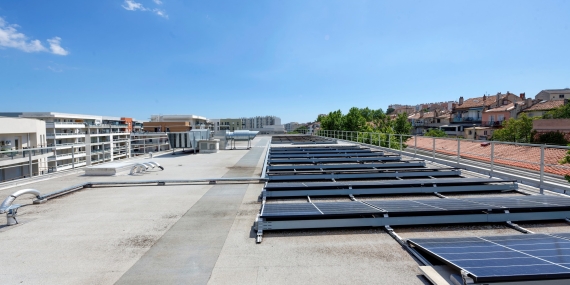
CARI Méd is also committed to energy optimization and the production of green energy, and has offered to install photovoltaic panels on the roofs of the four buildings making up the new Groupe Scolaire Saint-Louis. In this way, the town will be able to resell part of the energy generated, or use it to ensure the school's energy autonomy. What's more, as the school is located in a REP+ zone (Réseau éducation prioritaire renforcé), the image and dynamism of this district will be optimized.